
Telehealth, the practice of delivering psychiatric care via telecommunication technology has revolutionized mental health services, particularly for older adults. By breaking down barriers to care, it provides seniors with access to essential mental health support in ways that are convenient, personalized, and effective. This blog explores the benefits of telehealth in geriatric care, common challenges and their solutions, and real-world case examples highlighting its impact.
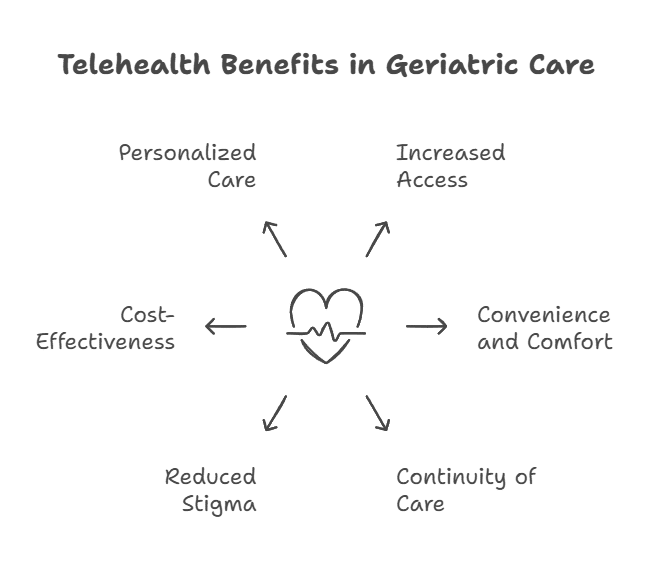
Benefits of Telehealth in Geriatric Care
Telehealth offers numerous advantages that cater to the unique needs of older adults. It addresses accessibility issues, reduces stigma, and enhances the quality of care.
1. Increased Access to Mental Health Services
- Rural and Underserved Areas: Telehealth connects seniors in remote or rural areas to mental health professionals who may not be locally available.
- Mobility Challenges: Seniors with physical disabilities or chronic illnesses can receive care without leaving their homes, reducing the burden of travel.
2. Convenience and Comfort
- Familiar Environment: Receiving care at home helps older adults feel more at ease, fostering open communication during sessions.
- Flexible Scheduling: Telehealth allows seniors to schedule appointments that fit their routines, avoiding the stress of rigid timelines.
3. Continuity of Care
- Regular virtual check-ins enable consistent monitoring of mental health conditions, medications, and progress.
- Telehealth supports transitions in care, such as from a hospital to home, ensuring uninterrupted support.
4. Reduced Stigma
- For some seniors, the stigma associated with visiting a mental health clinic may discourage seeking help. Virtual sessions offer privacy, encouraging more individuals to access care.
5. Cost-Effectiveness
- Telehealth eliminates travel expenses, reduces missed appointments, and lowers overall healthcare costs by preventing hospitalizations or advanced interventions.
6. Personalized and Holistic Care
- Telepsychiatrists can observe a senior’s living environment during virtual sessions, gaining insights into their lifestyle, social connections, and potential triggers for mental health concerns.
Common Challenges and Solutions
While Telehealth has transformed geriatric care, it comes with unique challenges. Addressing these effectively ensures its success.
1. Digital Literacy and Access
- Challenge: Many seniors are unfamiliar with the technology required for Telehealth, leading to difficulties in using devices or navigating platforms.
- Solution: Digital literacy programs tailored for older adults can teach basic skills, such as using video call platforms. Simplified devices designed with senior-friendly interfaces can further ease adoption.
2. Connectivity Issues
- Challenge: Poor internet access, especially in rural areas, can disrupt virtual sessions.
- Solution: Expanding broadband access in underserved regions is essential. In the interim, hybrid care models combining in-person and virtual sessions can mitigate this issue.
3. Cognitive Impairments
- Challenge: Seniors with conditions like dementia or mild cognitive impairment may struggle with understanding or engaging in Telehealth sessions.
- Solution: Involving family members or caregivers during sessions can provide support and ensure effective communication. Adapting session formats to accommodate cognitive limitations is also helpful.
4. Building Rapport Virtually
- Challenge: Establishing trust and connection can be more difficult in a virtual setting.
- Solution: Telepsychiatrists should use techniques such as maintaining eye contact, active listening, and verbal empathy to create a welcoming atmosphere. Starting with an in-person session before transitioning to virtual care can also strengthen rapport.
5. Privacy Concerns
- Challenge: Seniors may worry about the security of their personal information during virtual sessions.
- Solution: Telehealth platforms must comply with strict privacy regulations, such as HIPAA, to protect patient data. Educating patients on these safeguards builds confidence in the system.
Case Examples and Success Stories
Real-world applications of Telehealth demonstrate its transformative impact on the lives of older adults.
Case Example 1: Managing Depression in Rural Areas
- Scenario: A 72-year-old woman in a remote area struggled with severe depression after the death of her spouse. The nearest mental health clinic was over 50 miles away.
- Solution: Telehealth enabled her to connect with a psychiatrist for weekly therapy sessions. Through Cognitive Behavioral Therapy (CBT) and antidepressant management, her symptoms improved significantly.
- Outcome: The patient reported feeling less isolated and more hopeful about her future. Virtual sessions allowed her to access care she otherwise wouldn’t have received.
Case Example 2: Supporting Cognitive Impairment
- Scenario: An 80-year-old man with mild cognitive impairment was experiencing anxiety about his declining memory but had difficulty attending in-person appointments due to mobility issues.
- Solution: Through telehealth, his provider conducted neuropsychological assessments remotely and introduced tailored cognitive rehabilitation exercises.
- Outcome: The patient’s anxiety reduced as he learned coping strategies and received consistent support, all without leaving his home.
Case Example 3: Combating Loneliness Through Group Therapy
- Scenario: A group of older adults in an assisted living facility expressed feelings of loneliness, exacerbated by limited social interactions during the COVID-19 pandemic.
- Solution: Telehealth facilitated a virtual group therapy program where participants could share experiences and build connections.
- Outcome: Participants reported reduced feelings of isolation and increased satisfaction with their social lives. The program was later expanded to include mindfulness sessions and virtual activities.
Case Example 4: Caregiver Collaboration
- Scenario: A 68-year-old woman caring for her husband with Parkinson’s disease dementia was overwhelmed and experiencing symptoms of caregiver burnout.
- Solution: Telehealth provided her with access to counseling, while a psychiatrist virtually evaluated her husband’s condition and recommended adjustments to his treatment plan.
- Outcome: The caregiver felt empowered to manage her role, and her husband’s improved symptoms reduced her stress. Virtual sessions allowed both to receive care simultaneously.
Telehealth has emerged as a game-changer in geriatric mental health care, addressing critical barriers to access and offering personalized, effective solutions for seniors. By providing a bridge between healthcare providers and older adults, it ensures that mental health support is available regardless of geographic or physical limitations.
At Amavi Integrative Mental Wellness, we are proud to leverage telehealth to serve the unique needs of our older patients. Whether you’re seeking help for yourself or a loved one, contact us to learn how our innovative telehealth services can make a difference in your mental health journey.