
Loneliness is a growing concern among older adults, with significant implications for their mental, emotional, and physical health. As individuals age, they often experience changes in social dynamics, health, and independence, increasing the risk of social isolation. This blog examines the causes of social isolation, the role of community engagement, and the potential of technology in reducing loneliness.
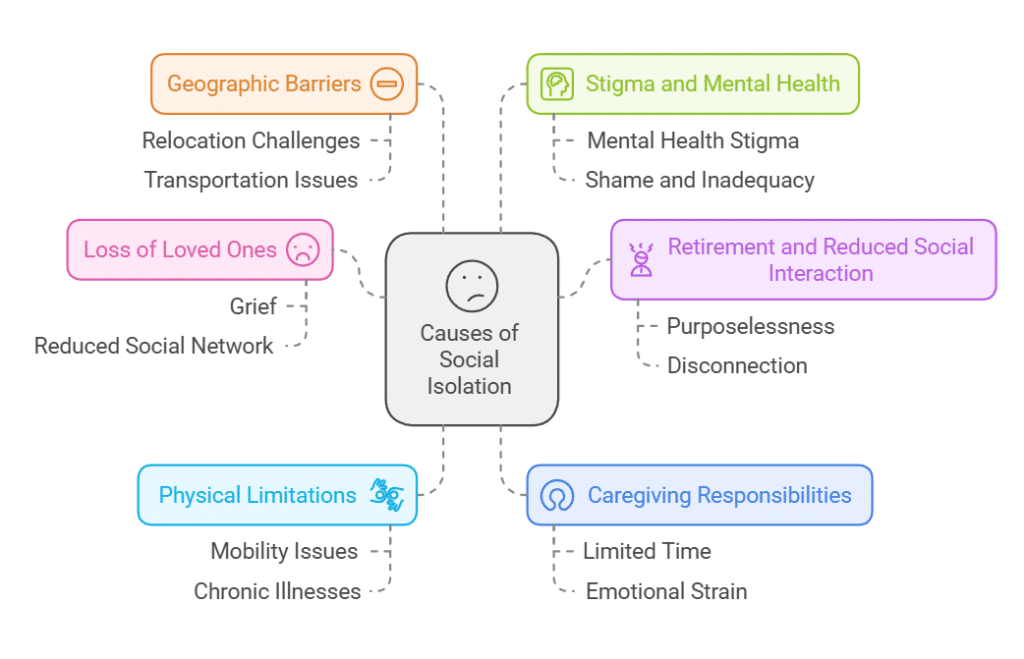
Causes of Social Isolation
Social isolation stems from a range of factors that disproportionately affect older adults. Understanding these causes is crucial to addressing the root of loneliness.
1. Loss of Loved Ones
- The loss of a spouse, close friends, or family members is a common experience for older adults, leading to grief and a reduced social network.
- Loneliness often intensifies when individuals struggle to rebuild their social connections after such losses.
2. Retirement and Reduced Social Interaction
- Retirement brings significant lifestyle changes, including the loss of workplace relationships and daily social interactions.
- The transition can leave individuals feeling purposeless and disconnected.
3. Physical Limitations
- Mobility issues, chronic illnesses, or disabilities can restrict older adults’ ability to leave their homes, participate in activities, or visit friends and family.
- Conditions such as hearing or vision loss may further hinder communication and engagement.
4. Caregiving Responsibilities
- Older adults caring for a spouse or family member may have limited time or energy for socializing, increasing isolation.
- Emotional strain from caregiving responsibilities can also contribute to feelings of loneliness.
5. Geographic Barriers
- Relocation to retirement communities or areas far from family and friends often limits opportunities for social interaction.
- Seniors in rural areas may face additional challenges due to limited transportation and fewer community resources.
6. Stigma and Mental Health
- Stigma surrounding mental health issues, such as depression or anxiety, may prevent older adults from seeking help or joining social groups.
- Feelings of shame or inadequacy can exacerbate isolation and loneliness.
Role of Community Engagement
Community engagement is a powerful antidote to loneliness, offering older adults opportunities to build connections, find purpose, and enhance their overall well-being.
1. Participating in Social Activities
- Senior centers, local clubs, and recreational programs provide accessible venues for older adults to meet peers and engage in meaningful activities.
- Group exercise classes, hobby workshops, or book clubs encourage interaction while promoting physical and cognitive health.
2. Volunteering
- Volunteering fosters a sense of purpose and accomplishment while enabling older adults to give back to their communities.
- Organizations like libraries, hospitals, and nonprofits often welcome senior volunteers, creating avenues for socialization.
3. Intergenerational Programs
- Intergenerational initiatives bring older adults and younger generations together for mutual learning and companionship.
- Activities such as mentoring, storytelling, or shared projects strengthen community bonds and reduce age-related stereotypes.
4. Religious and Spiritual Communities
- Religious groups offer regular opportunities for gathering, support, and engagement, helping seniors feel connected to a larger purpose.
- Faith-based organizations often provide outreach services for isolated individuals, such as home visits or transportation to events.
5. Cultural and Educational Opportunities
- Attending local theater productions, art exhibitions, or educational workshops expands social networks and stimulates the mind.
- Lifelong learning programs at community colleges or universities specifically cater to older adults, combining education with camaraderie.
6. Creating Safe and Inclusive Spaces
- Community initiatives that address accessibility, inclusivity, and diversity ensure that seniors from all backgrounds feel welcome and supported.
- Programs should consider the unique needs of individuals with mobility challenges, language barriers, or cultural differences.
Technology to Reduce Loneliness
Advances in technology have created new ways to combat loneliness among older adults. While there may be a learning curve, user-friendly devices and tools can bridge gaps in social connection and accessibility.
1. Video Communication
- Platforms like Zoom, Skype, or FaceTime allow older adults to stay in touch with family and friends, fostering real-time, face-to-face interaction despite physical distance.
- Virtual gatherings, such as family celebrations or book clubs, help seniors feel included and valued.
2. Social Media and Online Communities
- Social media platforms enable seniors to connect with distant relatives, old friends, or interest-based groups.
- Online forums or Facebook groups tailored for older adults provide safe spaces for sharing experiences and forming new connections.
3. Digital Cognitive and Recreational Tools
- Apps offering brain training, puzzles, or virtual tours engage seniors mentally while providing a sense of achievement.
- Platforms like Meetup facilitate finding local events and activities based on personal interests.
4. Telehealth and Telepsychiatry
- Access to virtual counseling or support groups reduces barriers to mental health care, especially for seniors with mobility or transportation challenges.
- Telepsychiatry services help identify and address underlying issues contributing to loneliness, such as depression or anxiety.
5. Wearable Technology
- Devices like smartwatches or fitness trackers encourage physical activity and remind users of self-care tasks, indirectly promoting well-being.
- Some wearables feature emergency alert systems, providing peace of mind and encouraging seniors to engage in outdoor activities confidently.
6. Bridging the Digital Divide
- Offering digital literacy programs empowers seniors to use technology effectively and safely. Libraries, senior centers, or nonprofit organizations often provide free classes on navigating devices and online platforms.
- Simplified devices, such as tablets designed for older users, make technology more accessible and less intimidating.
7. Virtual Companions and AI Tools
- AI-driven virtual companions, such as robotic pets or conversational assistants, provide companionship and reduce feelings of loneliness for seniors living alone.
- These tools can also remind users about medications, appointments, or social activities.
Managing loneliness in aging populations requires a multifaceted approach that addresses the underlying causes, fosters community engagement, and leverages technology to build connections. By creating supportive environments and accessible opportunities for interaction, society can significantly enhance the mental health and quality of life of older adults.
At Amavi Integrative Mental Wellness, we recognize the profound impact of loneliness on geriatric mental health. Our holistic services prioritize personalized care, community involvement, and innovative solutions to help older adults lead fulfilling, connected lives. Contact us to learn how we can support you or your loved one in combating loneliness and achieving greater well-being.