Anxiety disorders affect millions worldwide, but not everyone seeks traditional medical treatments, such as therapy or medication. For some, incorporating natural remedies and lifestyle changes can play a significant role in managing anxiety symptoms effectively. While these approaches may not replace professional treatment for severe cases, they can complement existing interventions or provide relief for those with milder symptoms. This blog explores the role of diet, exercise, and sleep, highlights stress management techniques like mindfulness and meditation, and examines natural remedies from a scientific perspective.
1. Role of Diet, Exercise, and Sleep in Reducing Anxiety
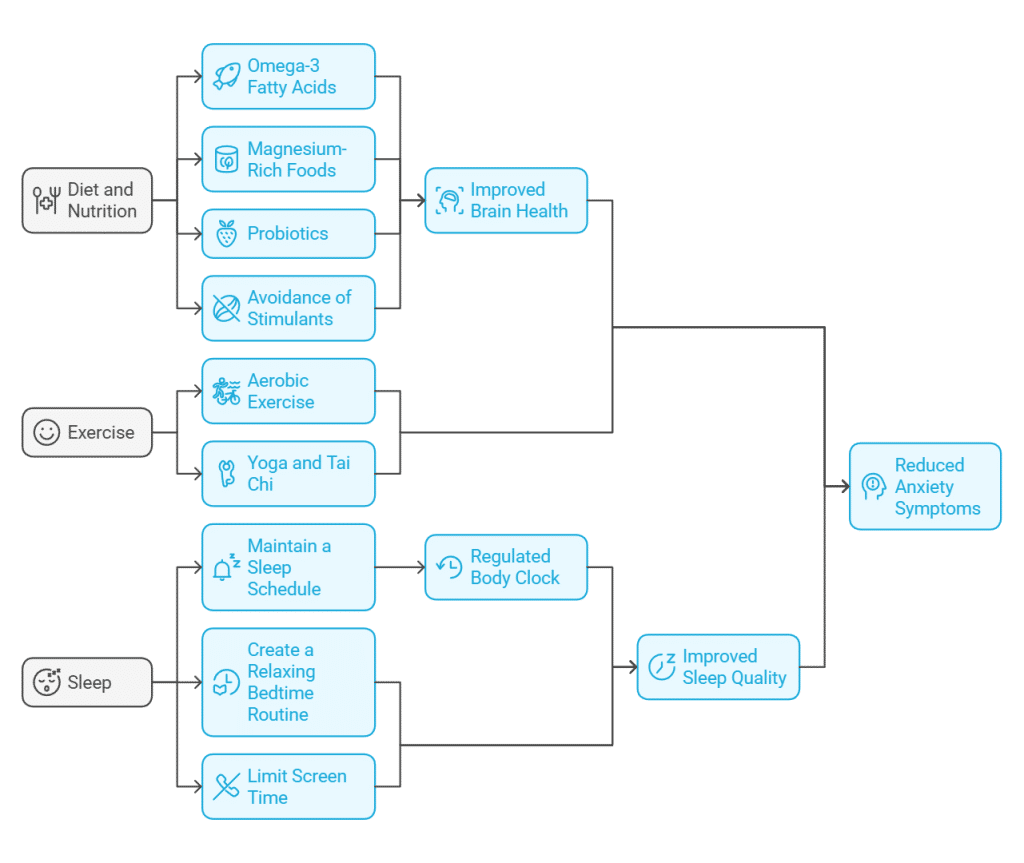
The connection between physical health and mental well-being is undeniable. Diet, exercise, and sleep are foundational elements that significantly influence anxiety levels.
Diet and Nutrition
A well-balanced diet rich in essential nutrients supports brain health and helps regulate mood. Certain foods can have a calming effect, while others may exacerbate anxiety symptoms.
- Omega-3 Fatty Acids: Found in fatty fish like salmon and walnuts, omega-3s support brain function and reduce inflammation, which is linked to anxiety.
- Magnesium-Rich Foods: Dark leafy greens, almonds, and avocados are rich in magnesium, a mineral known to reduce stress and promote relaxation.
- Probiotics: Gut health is closely tied to mental health. Probiotic-rich foods like yogurt, kefir, and fermented vegetables improve gut microbiota, potentially reducing anxiety.
- Avoidance of Stimulants: Caffeine and sugar can trigger or worsen anxiety symptoms by overstimulating the nervous system. Moderating these substances can help maintain emotional balance.
Exercise
Regular physical activity is one of the most effective natural remedies for anxiety. Exercise reduces stress hormones like cortisol while increasing endorphins, which promote feelings of happiness and relaxation.
- Aerobic Exercise: Activities like running, swimming, and dancing boost cardiovascular health and reduce anxiety symptoms by improving overall mood.
- Yoga and Tai Chi: These practices combine physical movement with deep breathing and mindfulness, offering both physical and mental benefits.
Engaging in consistent exercise routines, even for 30 minutes a day, can lead to significant improvements in anxiety management.
Sleep
Sleep and anxiety share a bidirectional relationship: poor sleep exacerbates anxiety, and anxiety disrupts sleep. Establishing healthy sleep habits can help break this cycle.
- Maintain a Sleep Schedule: Going to bed and waking up at the same time daily helps regulate your body’s internal clock.
- Create a Relaxing Bedtime Routine: Activities like reading, taking a warm bath, or practicing deep breathing before bed can signal to your body that it’s time to unwind.
- Limit Screen Time: Reducing exposure to blue light from devices in the evening prevents interference with melatonin production, a hormone critical for sleep.
2. Stress Management Techniques Like Mindfulness and Meditation
Stress is a significant trigger for anxiety, and managing stress effectively can help alleviate symptoms. Mindfulness and meditation are powerful tools that train the mind to stay present and reduce the hold of anxious thoughts.
Mindfulness
Mindfulness involves paying attention to the present moment without judgment. By focusing on the here and now, mindfulness reduces rumination and breaks the cycle of negative thought patterns that fuel anxiety.
- Mindful Breathing: Practicing deep, intentional breathing can help calm the nervous system and bring focus to the present. A common technique is the 4-7-8 method: inhale for four seconds, hold for seven seconds, and exhale for eight seconds.
- Body Scan Meditation: This practice involves bringing awareness to different parts of your body, noticing sensations, and releasing tension.
Incorporating mindfulness into daily routines, such as during meals or while walking, can make it easier to access its benefits regularly.
Meditation
Meditation is a structured practice that helps cultivate a calm and focused mind. It reduces anxiety by lowering heart rate, blood pressure, and stress hormones.
- Guided Meditation: Apps like Headspace and Calm provide structured programs tailored for anxiety management.
- Loving-Kindness Meditation: This practice focuses on generating feelings of compassion for yourself and others, which can reduce self-critical thoughts often associated with anxiety.
Research shows that even brief meditation sessions, such as 10–15 minutes a day, can significantly improve anxiety symptoms over time.
Other Stress Management Techniques
- Journaling: Writing down worries or tracking triggers can help you identify patterns and develop solutions.
- Time Management: Organizing tasks and setting realistic goals reduce feelings of overwhelm and promote a sense of control.
3. Scientific Perspective on Natural Remedies
Natural remedies, ranging from herbal supplements to aromatherapy, are gaining popularity for anxiety management. While many are backed by anecdotal evidence, some have a solid foundation in scientific research.
Herbal Supplements
- Ashwagandha: This adaptogenic herb is known to reduce stress and lower cortisol levels. Studies suggest it may improve symptoms of anxiety in people with generalized anxiety disorder.
- Chamomile: Commonly consumed as tea, chamomile contains compounds with calming effects. Research shows that it can reduce mild to moderate anxiety.
- Lavender: Lavender oil, used in aromatherapy or as a supplement, has been shown to promote relaxation and reduce symptoms of anxiety.
Aromatherapy
Essential oils, such as lavender, bergamot, and ylang-ylang, are often used to create a calming environment. These oils can be diffused, applied topically, or added to baths. Some studies indicate that inhaling lavender oil may lower heart rate and reduce anxiety.
Limitations and Precautions
While natural remedies can be beneficial, it’s important to approach them with caution. Not all remedies are suitable for everyone, and some may interact with medications or have side effects. Consulting a healthcare provider before starting any supplement or treatment is essential, especially for individuals with pre-existing conditions or those taking prescription medications.
The Role of Holistic Approaches in Anxiety Management
Natural remedies and lifestyle changes offer a holistic approach to managing anxiety, addressing both physical and mental well-being. By focusing on diet, exercise, and sleep, incorporating mindfulness and meditation, and exploring scientifically supported natural remedies, individuals can take proactive steps to alleviate anxiety symptoms and improve their overall quality of life.
While these strategies are not a substitute for professional care in severe cases, they can be valuable tools in a comprehensive anxiety management plan. With dedication and consistency, it’s possible to regain a sense of calm and control, fostering resilience in the face of life’s challenges. If you’re struggling with anxiety, consider incorporating these natural approaches into your daily routine and consult with a healthcare professional for personalized guidance at Amavi Integrative Mental Wellness.